September Only: $5,000 Startup Brand Identity Package [start here]

CONTACT

Stop Selling, Start Storytelling: Why Narrative Converts

In a world oversaturated with messages, facts alone don’t cut through. Story does.

Not just because it’s emotional, but because it’s memorable, scalable, and, when done right, profitable. If your brand is still leaning on stats, specs, and slide decks to make a point, you’re missing the opportunity to create something deeper: resonance.

Storytelling is Strategy

We’re not talking about bedtime stories or marketing fluff. We’re talking about narrative frameworks that position your audience as the hero—and your brand as the catalyst.

Take Nike, for example. Their campaigns rarely talk about shoes. Instead, they tell stories of perseverance, struggle, and triumph—because they know their product is a vehicle, not the destination. Their “Find Your Greatness” campaign? It wasn’t about product specs. It was about the average person doing extraordinary things.

The result? Emotional engagement. Brand loyalty. Conversion.

The Science of the Sell

Neuroscience backs this up. Studies show that narratives stimulate the brain’s sensory cortex, triggering emotional responses that facts and figures simply can’t. When we hear a story, we feel it—and that emotional connection directly influences buying decisions.

For B2B brands, this isn’t a “nice to have”—it’s a must. When your competitor is saying, “We’re the best at X,” and you’re showing a relatable, real-world transformation? You win attention. You win trust. You win business.

Turning Capabilities into Characters

So, how does this work in practice?

Let’s say you’re a software platform offering automation solutions. Instead of leading with, “We reduce inefficiencies by 34%,” you lead with the story of a frustrated operations manager who saved her team from burnout by implementing your solution—then grew her department’s influence in the company.

That’s what Slack did with its early growth content. They focused on how people felt before and after using the tool: frustrated with email, relieved by simplicity. It wasn’t a product push—it was a story of empowerment.

Where Stories Belong

Your brand story shouldn’t live in a silo. It should show up everywhere:
  • Website copy should guide users through a narrative arc, not dump data.
  • Case studies should read like mini-journeys, with tension, transformation, and resolution.
  • Sales decks should lean into plot, not just points—focusing on how your solution changes lives or businesses.
  • Campaigns should tap into cultural moments or human truths, not just market trends.

Even your About page should tell a story worth reading, not a résumé.

The Bottom Line

Great storytelling is how complex brands become clear. It’s how B2B messaging becomes human. And it’s how marketing transforms from noise into meaning.

Don’t just say what you do. Show people why it matters—through stories that stick.

Ready to turn your brand’s value into a story that connects and converts?

Let’s build a narrative that gets remembered, not skimmed.
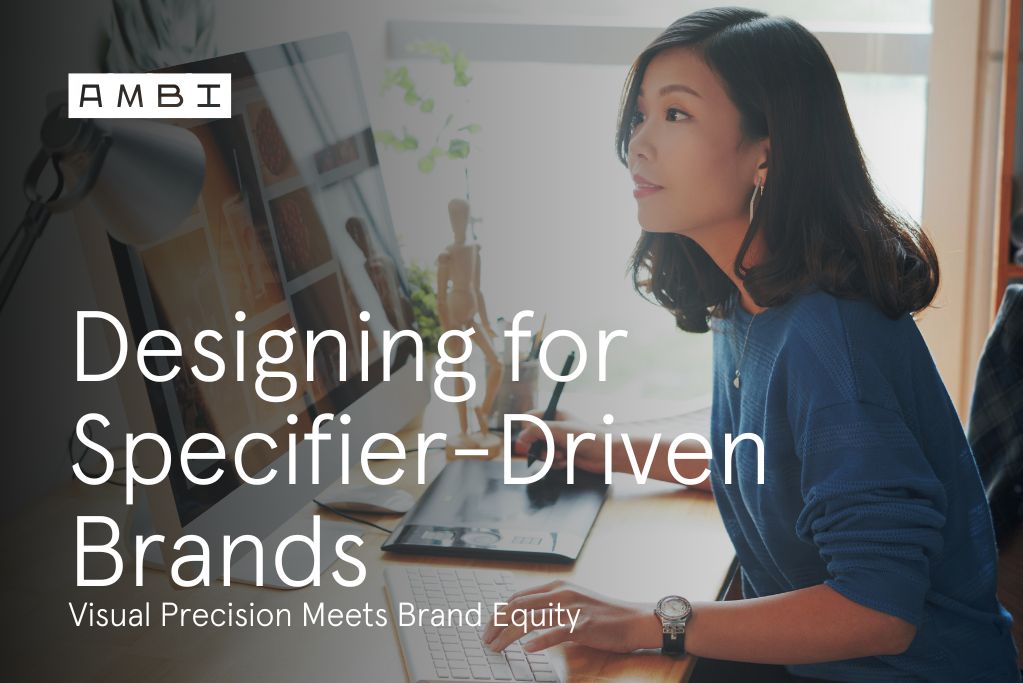
Visual Precision: Designing for Specifier-Driven Brands

In the built environment, aesthetics matter—but clarity matters more.

Architects, designers, and engineers aren’t just browsing; they’re specifying. Every visual element your brand produces—from digital tools to product sheets—needs to do more than look good. It needs to inform with precision, build trust, and support fast, confident decision-making in high-stakes environments.

Specifiers Aren’t Guessing—They’re Filtering

Specifier audiences don’t have time for ambiguity. When evaluating a product, they want to know:
  • Will this work within my design?
  • Is it available within my timeline?
  • Does it meet performance and sustainability standards?

That means visual design has to carry more than beauty. It has to deliver data clearly and intuitively.

Unfortunately, many brands in the built environment still rely on vague mood boards or marketing visuals that don’t align with specifier expectations. The result? Lost confidence. Slower decisions. And sometimes, being cut from the shortlist altogether.

What Visual Precision Looks Like

Visually precise branding doesn’t just showcase a product—it tells a specifier everything they need to know at a glance. That means:
  • High-resolution product renderings with scale, context, and clear linework
  • Detailed exploded views for complex assemblies or installations
  • Color-accurate material photography, especially for finishes that shift in natural light
  • Interactive tools that allow users to manipulate, compare, or configure products in real-time
  • Clear icons or labeling for specs like light output, finish options, or certifications

The lighting industry has begun embracing this with tools like virtual mockups and adjustable spec sheets. But many other building product sectors lag behind, particularly those dealing in materials, hardware, or building services.

Precision Supports Performance—and Sales

Brands that design for clarity earn trust faster. When your visuals eliminate guesswork, you reduce RFIs, streamline procurement, and accelerate the path from spec to install.

Take the success of companies like Flos Architectural or 3form, which both excel at translating complex products into elegantly simple visual systems. From sample kits to configurators, everything reinforces not just aesthetic quality, but dependability.

Design, when done well, becomes a tool of conversion.

How AMBI Helps Visuals Work Harder

At AMBI, we partner with brands across the built environment to elevate their creative—without compromising clarity. Whether it’s a product visualization, brand refresh, or tool interface, we build design systems that specifiers trust and prefer.

We understand the expectations of A&D professionals because we’ve worked where they work. That insight informs everything we create.

Building a Resilient Creative Team: Strategies for Sustained Excellence

Creative excellence isn’t a lightning bolt—it’s a rhythm. And like any good rhythm, it requires stamina, chemistry, and the right tempo to keep it going. At W.Bradford, we’ve learned that building a creative team that performs consistently (and joyfully) under pressure takes more than talent. It takes intention.

Here’s how we cultivate resilience without dimming creative spark:

Hire for Curiosity, Not Just Skill

Technical prowess gets you in the door. Curiosity keeps the work fresh. We seek out creatives who want to know why a brand ticks, not just how to make it look good. When curiosity becomes culture, resilience follows—because curiosity keeps the work interesting, even when the deadlines aren’t.

Make Process an Ally, Not a Cage

Structure is necessary. But too much of it stifles the very thing we’re here to do—create. We build processes that flex, so our teams can spend more time exploring ideas and less time fighting red tape. Predictability in how we work creates the freedom to push boundaries.

Normalize Constructive Friction

Great creative doesn’t happen in echo chambers. We encourage respectful pushback, diverse perspectives, and the kind of honest dialogue that makes work better. Conflict, when handled right, is fuel. And resilient teams know how to use it.

Invest in Energy Management

Burnout doesn’t just kill momentum—it erodes culture. We watch workloads, prioritize rest, and give space for creative recovery. Sometimes that means saying “no” to one more revision. Sometimes it’s a spontaneous, creative retreat. Either way, our team’s energy isn’t an infinite resource, and we treat it accordingly.

Celebrate the Process, Not Just the Outcome

Big wins are great. But we also hype the way we got there. The late-night breakthrough. The sticky-note storm session. The “what if we…” moment that turned into the campaign centerpiece. Recognition keeps morale high and reminds everyone why we love this work in the first place.

The Takeaway

Resilience isn’t about pushing harder. It’s about designing a culture where creativity can thrive long-term. For us, that’s the key to consistently bold, brand-defining work—and a team that actually enjoys doing it.

Want to build a brand that attracts, inspires, and endures?

Let’s talk about how W.Bradford can help you turn creative resilience into real business impact.

Own the Niche: The Power of Micro-Positioning in the Built Environment

In the crowded world of the built environment, many brands try to appeal to everyone—architects, designers, contractors, and end users alike. But in trying to be everything to everyone, they often end up being forgettable to most. The brands that truly stand out are those that own their niche—not just through product innovation, but through focused, strategic positioning that speaks directly to the needs of their ideal audience.

Broad Messaging Isn’t Safer—It’s Riskier

Many companies default to broad messaging out of fear: fear of alienating potential customers, fear of missing opportunities, fear of not growing fast enough. But in doing so, they dilute what makes them different. When every brand claims to offer “innovative solutions” and “industry-leading service,” none of them stand out.

This is especially true in sectors like lighting, materials and finishes, and building services, where differentiation requires more than just aesthetics—it demands clarity, precision, and relevance.

Micro-Positioning Builds Trust and Preference

Micro-positioning is the strategic act of narrowing your brand focus to deeply serve a specific audience or application. It’s not about limiting your potential—it’s about owning a meaningful space in the market.

Consider the rise of brands like DIRTT, which built their reputation by focusing entirely on modular interior construction systems for commercial spaces. Or Ketra, whose marketing zeroed in on the emotional and biological impact of tunable lighting. These brands didn’t chase every possible buyer—they became the default choice for the buyers who mattered most.

When you position narrowly, you gain:

  • Deeper brand relevance with target decision-makers
  • Higher-quality leads who are further along in the buying journey
  • Shorter sales cycles due to clearer differentiation
  • Stronger brand loyalty, because clients feel seen and understood 

The Built Environment Demands Specialization

In this industry, specificity is a strength. Architects want partners who understand design language. Contractors value clear documentation and lead-time reliability. Owners prioritize sustainability and total cost of ownership. Trying to speak to all three in the same breath weakens your impact.

Instead, consider:

  • Developing separate landing pages for different specifier audiences
  • Creating content tailored to a vertical (e.g., healthcare, higher ed, hospitality)
  • Highlighting certifications, applications, or values that matter deeply to a narrow segment

When you speak their language, they’re more likely to listen—and act.

How AMBI Helps Brands Get Specific

At AMBI, we help built environment brands refine their message and expand their impact through focus, not generalization. Our team understands the nuances of AEC decision-making and the complex ecosystems products must navigate—from spec to installation.

Through strategy, design, and marketing informed by real industry insight, we position brands where they can win: not by shouting louder, but by speaking smarter.

Want to become the go-to brand in your category? Let’s define your niche—and help you own it. 

Why Hiring a Marketing Agency in Turbulent Times Is a Smart Move

When the economy shakes, the knee-jerk reaction for many businesses is to slash budgets—often starting with marketing. But history and strategy tell us that cutting visibility during uncertain times can do more harm than good. In fact, economic turbulence is exactly when you should lean on a skilled marketing agency.

Here’s why:

1. Agility and Efficiency

In a fast-changing market, the ability to pivot quickly is everything. Marketing agencies are built for agility. They have cross-functional teams and proven systems that allow them to adapt campaigns quickly, test new approaches, and optimize based on real-time data. That kind of nimbleness is hard to replicate in-house, especially when teams are stretched thin.

2. Smarter Spending, Better ROI

Marketing agencies know how to do more with less. They’re used to working within tight budgets and can help you prioritize high-ROI channels—whether that’s performance ads, content marketing, email automation, or SEO. They have access to tools and insights you’d have to pay extra for, and they already know how to use them effectively. Every dollar gets put to work strategically.

3. Fresh Perspective and Strategic Clarity

When you’re inside the business, it’s hard to see the bigger picture. An outside agency brings objectivity and clarity. They help you refocus on your value proposition, hone your messaging, and speak directly to what your customers need right now. In tough times, relevance is everything—and agencies excel at making brands relevant.

4. Consistency Builds Trust

It’s tempting to “go quiet” when the market feels uncertain, but that’s exactly when your audience needs reassurance. Brands that continue showing up—even modestly—signal confidence, stability, and reliability. Agencies ensure your brand voice remains consistent, professional, and present across channels, helping you maintain trust and visibility while competitors fade out.

5. Preparation for the Rebound

Economic slowdowns don’t last forever. When the market bounces back, the brands that stayed active won’t be starting from scratch—they’ll be ahead. A marketing agency can help you plant seeds now that will grow into real momentum later. The worst time to start building your brand is when everyone else already has a head start.


Final Thoughts:

Hiring a marketing agency in turbulent times isn’t a luxury—it’s a strategic decision. The right partner won’t just help you survive a downturn—they’ll help you use it as a springboard for smarter growth.

SPARK. SHAPE. SCALE
Let's Go

Let’s Get Started

Ready for an all-in partner with the talent, skills, and guts to take you to the next level? Share information below, and we’ll be in touch soon.