September Only: $5,000 Startup Brand Identity Package [start here]

CONTACT

Visual Precision: Designing for Specifier-Driven Brands

In the built environment, aesthetics matter—but clarity matters more.

Architects, designers, and engineers aren’t just browsing; they’re specifying. Every visual element your brand produces—from digital tools to product sheets—needs to do more than look good. It needs to inform with precision, build trust, and support fast, confident decision-making in high-stakes environments.

Specifiers Aren’t Guessing—They’re Filtering

Specifier audiences don’t have time for ambiguity. When evaluating a product, they want to know:
  • Will this work within my design?
  • Is it available within my timeline?
  • Does it meet performance and sustainability standards?

That means visual design has to carry more than beauty. It has to deliver data clearly and intuitively.

Unfortunately, many brands in the built environment still rely on vague mood boards or marketing visuals that don’t align with specifier expectations. The result? Lost confidence. Slower decisions. And sometimes, being cut from the shortlist altogether.

What Visual Precision Looks Like

Visually precise branding doesn’t just showcase a product—it tells a specifier everything they need to know at a glance. That means:
  • High-resolution product renderings with scale, context, and clear linework
  • Detailed exploded views for complex assemblies or installations
  • Color-accurate material photography, especially for finishes that shift in natural light
  • Interactive tools that allow users to manipulate, compare, or configure products in real-time
  • Clear icons or labeling for specs like light output, finish options, or certifications

The lighting industry has begun embracing this with tools like virtual mockups and adjustable spec sheets. But many other building product sectors lag behind, particularly those dealing in materials, hardware, or building services.

Precision Supports Performance—and Sales

Brands that design for clarity earn trust faster. When your visuals eliminate guesswork, you reduce RFIs, streamline procurement, and accelerate the path from spec to install.

Take the success of companies like Flos Architectural or 3form, which both excel at translating complex products into elegantly simple visual systems. From sample kits to configurators, everything reinforces not just aesthetic quality, but dependability.

Design, when done well, becomes a tool of conversion.

How AMBI Helps Visuals Work Harder

At AMBI, we partner with brands across the built environment to elevate their creative—without compromising clarity. Whether it’s a product visualization, brand refresh, or tool interface, we build design systems that specifiers trust and prefer.

We understand the expectations of A&D professionals because we’ve worked where they work. That insight informs everything we create.
Own the Niche: The Power of Micro-Positioning in the Built Environment

In the crowded world of the built environment, many brands try to appeal to everyone—architects, designers, contractors, and end users alike. But in trying to be everything to everyone, they often end up being forgettable to most. The brands that truly stand out are those that own their niche—not just through product innovation, but through focused, strategic positioning that speaks directly to the needs of their ideal audience.

Broad Messaging Isn’t Safer—It’s Riskier

Many companies default to broad messaging out of fear: fear of alienating potential customers, fear of missing opportunities, fear of not growing fast enough. But in doing so, they dilute what makes them different. When every brand claims to offer “innovative solutions” and “industry-leading service,” none of them stand out.

This is especially true in sectors like lighting, materials and finishes, and building services, where differentiation requires more than just aesthetics—it demands clarity, precision, and relevance.

Micro-Positioning Builds Trust and Preference

Micro-positioning is the strategic act of narrowing your brand focus to deeply serve a specific audience or application. It’s not about limiting your potential—it’s about owning a meaningful space in the market.

Consider the rise of brands like DIRTT, which built their reputation by focusing entirely on modular interior construction systems for commercial spaces. Or Ketra, whose marketing zeroed in on the emotional and biological impact of tunable lighting. These brands didn’t chase every possible buyer—they became the default choice for the buyers who mattered most.

When you position narrowly, you gain:

  • Deeper brand relevance with target decision-makers
  • Higher-quality leads who are further along in the buying journey
  • Shorter sales cycles due to clearer differentiation
  • Stronger brand loyalty, because clients feel seen and understood 

The Built Environment Demands Specialization

In this industry, specificity is a strength. Architects want partners who understand design language. Contractors value clear documentation and lead-time reliability. Owners prioritize sustainability and total cost of ownership. Trying to speak to all three in the same breath weakens your impact.

Instead, consider:

  • Developing separate landing pages for different specifier audiences
  • Creating content tailored to a vertical (e.g., healthcare, higher ed, hospitality)
  • Highlighting certifications, applications, or values that matter deeply to a narrow segment

When you speak their language, they’re more likely to listen—and act.

How AMBI Helps Brands Get Specific

At AMBI, we help built environment brands refine their message and expand their impact through focus, not generalization. Our team understands the nuances of AEC decision-making and the complex ecosystems products must navigate—from spec to installation.

Through strategy, design, and marketing informed by real industry insight, we position brands where they can win: not by shouting louder, but by speaking smarter.

Want to become the go-to brand in your category? Let’s define your niche—and help you own it. 

The Hidden Costs of Inefficiency in Commercial Projects—and How to Avoid Them

Commercial construction and interior projects are high-stakes undertakings. Budgets are tight, timelines are critical, and expectations are sky-high. Yet many teams still face costly project delays, budget overruns, and last-minute substitutions—often due to inefficiencies in the product sourcing and procurement process.

Time Isn’t the Only Thing Wasted

When lead times are unclear, products are discontinued without warning, or spec substitutions happen late in the process, it’s not just schedules that suffer. Design intent is compromised, client trust erodes, and rework drives up labor and material costs. According to a 2023 study by Dodge Construction Network, more than 60% of commercial projects report significant schedule changes due to procurement issues.

Additionally, last-minute product swaps often ignore sustainability goals, introducing materials that may lack necessary certifications or perform differently in the field. These substitutions don’t just impact LEED and WELL targets—they can compromise the entire design narrative.

The Real Price of Fragmentation

Most inefficiencies stem from misalignment: between what gets specified and what’s actually available, between budget expectations and final pricing, and between the design team and purchasing teams. Every disconnect introduces friction—and friction costs money, energy, and trust.

Common hidden costs include:

  • Rush fees due to delayed procurement
  • Rework and redesign from unavailable products
  • Contractor delays and schedule pushbacks
  • Increased emissions from sourcing alternatives with higher embodied carbon

AMBI’s Role in Streamlining Success

AMBI bridges the gap between specification and execution. Our digital platform and hands-on team eliminate the friction points that lead to surprise costs and project delays. By providing transparency around lead times, product availability, cost expectations, and third-party certifications, we empower commercial project teams to stay on track and budget.

We help align design, procurement, and sustainability goals through:

  • Real-time product availability insights
  • Centralized documentation for specs and certifications
  • Seamless communication across teams
  • Access to vetted, sustainable alternatives when substitutions are necessary

Efficiency is more than speed. It’s about clarity, confidence, and control. That’s what AMBI brings to every project: a streamlined path from vision to reality, with fewer surprises and better outcomes.

Ready to eliminate inefficiencies and deliver stronger results? See how AMBI transforms the sourcing process.

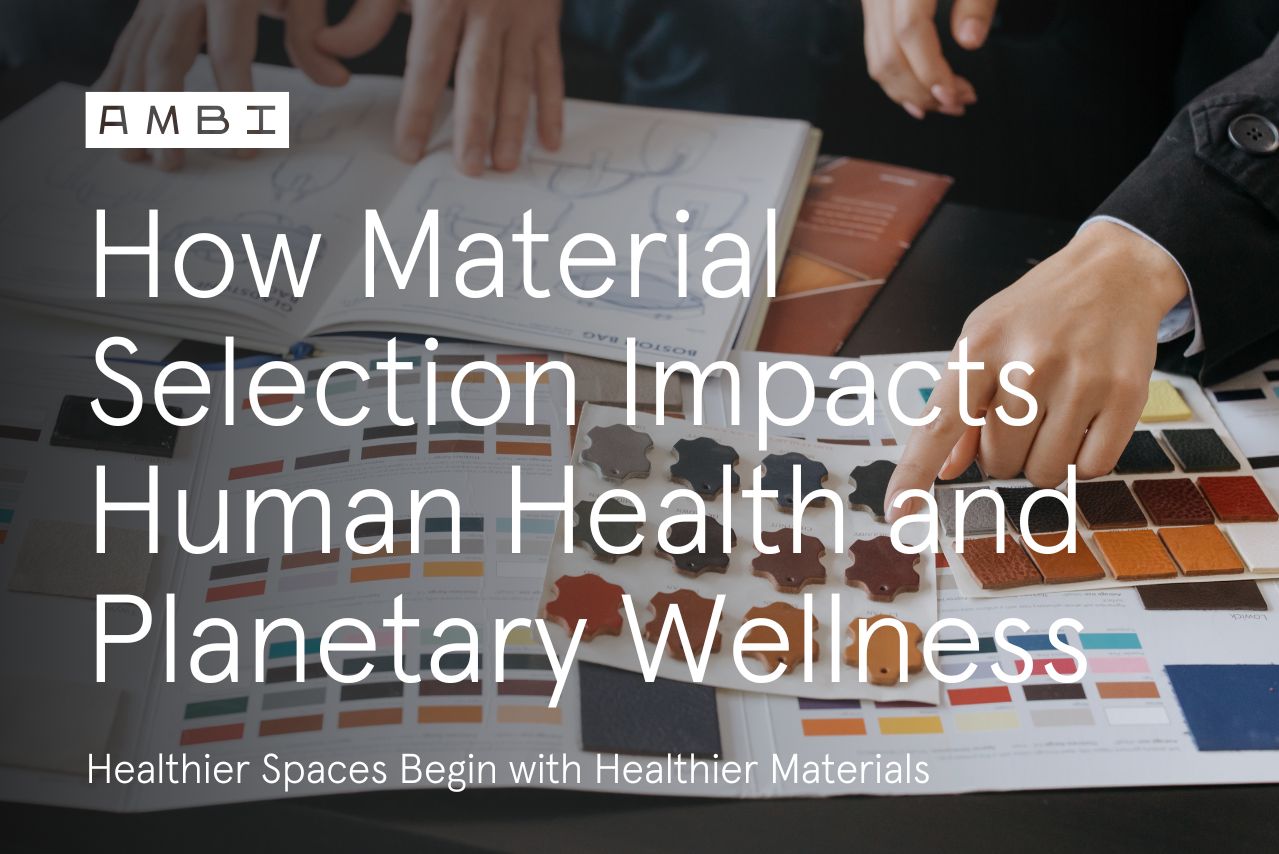
How Material Selection Impacts Human Health and Planetary Wellness

In today’s built environment, every material choice sends a message. It impacts not just the functionality and aesthetics of a space, but also the health of the people inside it and the long-term wellness of our planet. As awareness around material transparency, toxicity, and embodied carbon grows, specifiers, architects, and designers are being called to make more conscious, sustainable choices.

Healthier Spaces Begin with Healthier Materials

Indoor environments can either support or compromise human health. From VOC (volatile organic compounds) emissions in finishes to toxic flame retardants in textiles, the materials used in commercial buildings directly influence indoor air quality, cognitive function, and overall well-being. According to the U.S. Environmental Protection Agency (EPA), Americans spend approximately 90% of their time indoors, making material health a non-negotiable factor in design.

Specifying materials vetted for chemical safety — such as those certified by Declare, Cradle to Cradle, or GREENGUARD — helps ensure that building occupants aren’t unknowingly exposed to harmful substances. These certifications also help meet WELL Building Standard and LEED v4.1 requirements, offering measurable benefits to health-centric commercial design.

The Ripple Effect on Planetary Health

The story doesn’t end with what’s inside the walls. The extraction, manufacturing, transportation, and disposal of building materials are among the largest contributors to global carbon emissions. Embodied carbon from building materials is responsible for 11% of total global greenhouse gas emissions, according to the World Green Building Council.

Prioritizing low-embodied carbon products, recycled or upcycled content, and renewable resource-based options can reduce a project’s environmental impact dramatically. Thoughtful material selection isn’t just good for people — it’s essential for the planet.

Where AMBI Comes In

At AMBI, we simplify sustainable decision-making for commercial building projects. Our platform highlights vetted product options that meet both human health and planetary wellness criteria—without sacrificing performance or aesthetic integrity. From high-performance acoustic panels to FSC-certified wood products, our curated catalog helps design and procurement teams deliver on sustainability goals while preserving design intent.

We partner with innovative manufacturers who are committed to transparency, circularity, and impact. Whether you’re aiming for LEED certification or simply want to create better spaces, AMBI provides the access, tools, and support to help you get there.

Better buildings start with better materials. And better materials start with access, education, and tools. That’s the AMBI difference. Explore our vetted materials now and discover how easy sustainable sourcing can be.

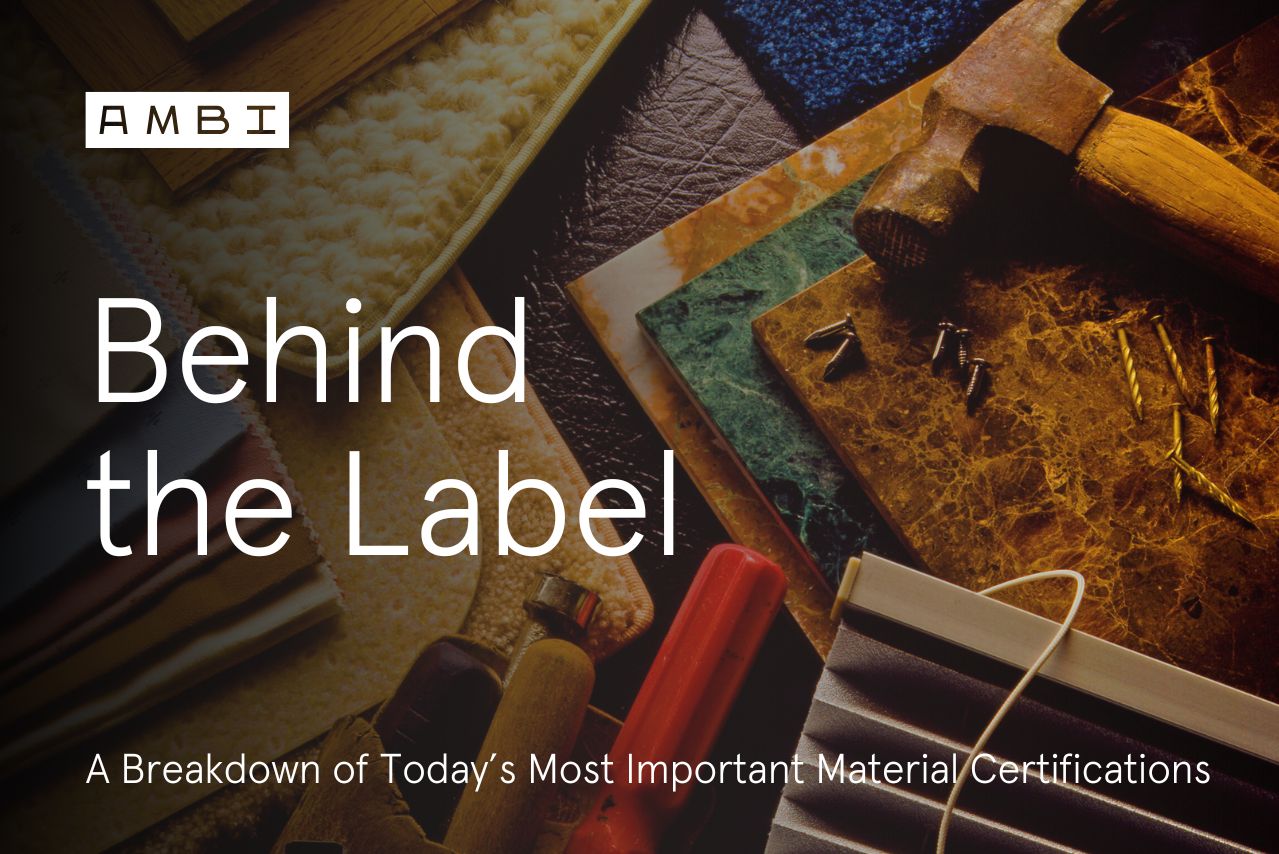
Behind the Label: A Breakdown of Today’s Most Important Material Certifications

In the evolving landscape of sustainable construction, transparency in material selection has become paramount. As stakeholders demand healthier, more environmentally responsible buildings, understanding and leveraging material certifications are essential. These certifications not only provide insights into product composition and environmental impact but also play a pivotal role in achieving green building standards like LEED and the Living Building Challenge.

Declare Label: The Building Product ‘Nutrition Label’

Developed by the International Living Future Institute, the Declare label offers a clear, concise disclosure of a product’s ingredients, sourcing, and end-of-life options. Often likened to a nutrition label for building products, it helps specifiers quickly identify materials that align with project sustainability goals.

  • Key Features:
    • Discloses all intentionally added ingredients and residuals above 100 ppm.
    • Indicates compliance with the Living Building Challenge Red List.
    • Provides information on product lifespan and recyclability.

Source: International Living Future Institute – Declare

Cradle to Cradle Certified®: A Holistic Approach to Sustainability

The Cradle to Cradle Certified® Product Standard evaluates products across multiple sustainability criteria, ensuring they are safe, circular, and responsibly made. This certification encourages continuous improvement and innovation in product design and manufacturing.

  • Assessment Categories:
    • Material Health
    • Product Circularity
    • Clean Air & Climate Protection
    • Water & Soil Stewardship
    • Social Fairness

Source: Cradle to Cradle Products Innovation Institute

Health Product Declaration (HPD): Detailed Material Transparency

The HPD Open Standard provides a standardized format for reporting the contents and associated health information of building products. It enables manufacturers to disclose potential health hazards, facilitating informed decision-making for specifiers and project teams.

  • Benefits:
    • Promotes transparency in material health.
    • Supports compliance with green building standards like LEED and WELL.
    • Encourages manufacturers to assess and improve product formulations.

Source: HPD Collaborative

LEED v4.1 Material Ingredients Credit: Encouraging Product Transparency

The U.S. Green Building Council’s LEED v4.1 includes credits that reward project teams for selecting products with disclosed material ingredients. By encouraging the use of products with HPDs, Declare labels, or Cradle to Cradle certifications, LEED promotes transparency and healthier building materials.

  • Credit Options:
    • Use at least 20 products from different manufacturers with publicly available reports.
    • Demonstrate the use of products that have undergone material ingredient optimization.

Source: U.S. Green Building Council – LEED Credit Library

AMBI’s Perspective: Navigating Material Transparency with Confidence

At AMBI, we understand that navigating the myriad of material certifications can be daunting. Our expertise lies in demystifying these certifications, providing our clients with clear, actionable insights to make informed material selections. By integrating certified materials into your projects, you not only meet regulatory requirements but also contribute to healthier, more sustainable built environments.

Whether you’re aiming for LEED certification, striving to meet the Living Building Challenge, or simply seeking to enhance the sustainability of your projects, AMBI is here to guide you every step of the way.

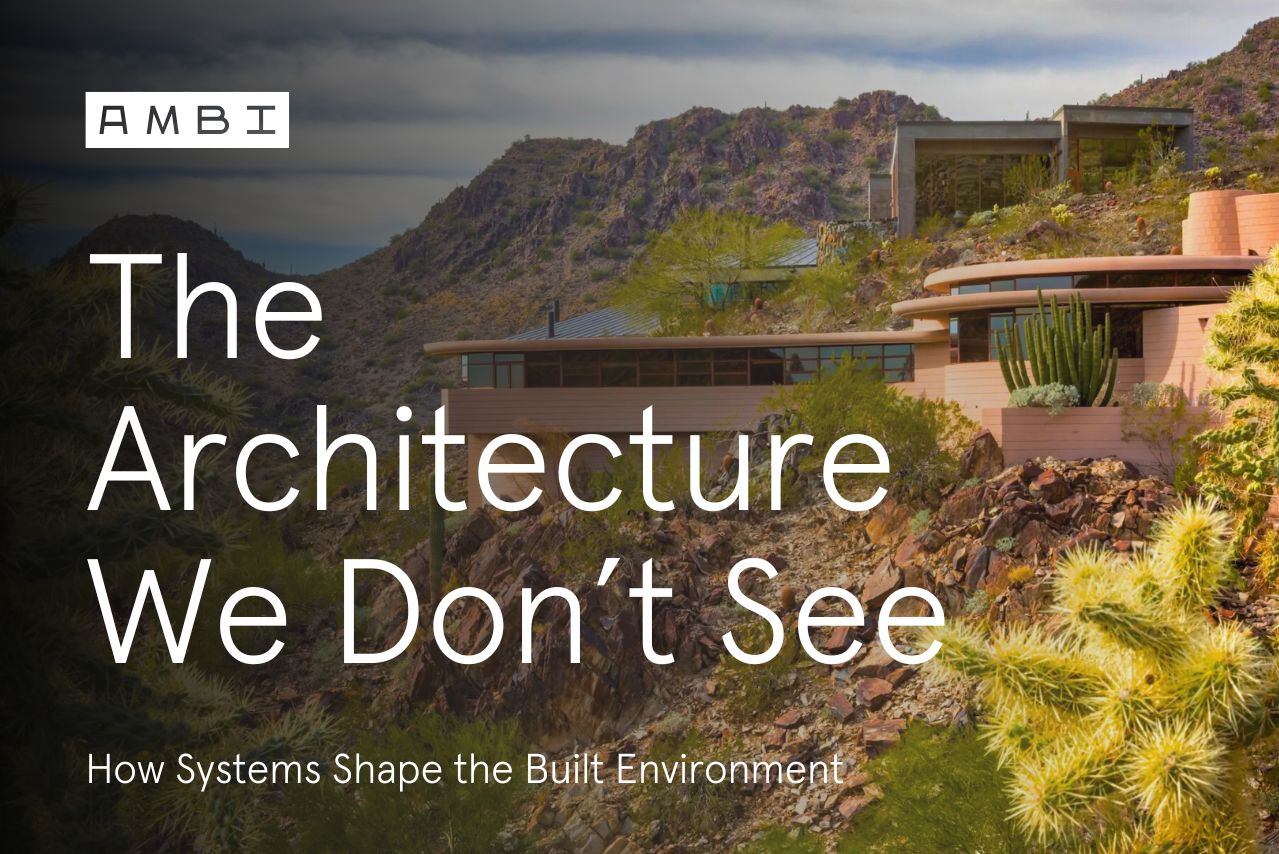
The Architecture We Don’t See: How Systems Shape the Built Environment

Architectural styles are iconic. From the romanticism of Gothic cathedrals to the clean geometry of Modernism, design movements shape how we experience the world—from cathedrals to classrooms to co-working spaces.

But while most guides focus on the aesthetic—columns, facades, ornamentation—we believe there’s a deeper story worth telling: the invisible systems that support these styles, and how they perform in today’s built environment.

At AMBI, we’re focused on what’s beneath the surface. Because the style of a building may capture attention—but the systems inside determine how it feels, functions, and sustains life over time.

Style is What You See. Performance is What You Experience.

Let’s take a few iconic architectural styles and look at them through a new lens: not just what they look like, but how they live.

Gothic Revival

Then: Soaring arches, stained glass, dramatic scale.

Now: In many retrofitted Gothic structures, HVAC systems, lighting retrofits, and air quality monitoring must be discreetly integrated into centuries-old buildings.

AMBI’s Take: Historic preservation is a systems challenge as much as a visual one. Success lies in performance upgrades that don’t compromise architectural integrity.

Mid-Century Modern

Then: Open floor plans, natural materials, indoor-outdoor living.

Now: These buildings were ahead of their time but can underperform when it comes to insulation, ventilation, and energy efficiency.

AMBI’s Take: A modernized mid-century structure should reflect today’s standards of thermal comfort, daylighting metrics, and energy data—not just nostalgia.

Brutalism

Then: Raw concrete, exposed structure, unapologetic minimalism.

Now: Often misunderstood, Brutalist buildings present challenges in occupant comfort, acoustics, and energy usage.

AMBI’s Take: Brutalism can thrive in the 21st century with system upgrades that prioritize human wellness—without smoothing over its character.

Designing for Today—Without Losing Sight of Yesterday

Great architecture doesn’t live in a vacuum. It breathes, evolves, and is expected to perform better over time.

Whether you’re working within a historic style or designing something new, the question is the same: Do the systems behind the walls match the aspirations of the design?

At AMBI, we partner with design teams to bridge that gap. We help translate timeless aesthetics into buildings that meet today’s standards—energy codes, wellness certifications, transparency expectations, and performance benchmarks.

AMBI’s Approach: Style + Substance

Because architecture isn’t just about what we see. It’s about how we feel, move, breathe, and thrive within it. Our mission at AMBI is to tap into this agile side of design and help your brand shine best.

Interested In Refining Your Brand’s Expression?

Tell us about how we can help your brand grow.

SPARK. SHAPE. SCALE
Let's Go

Let’s Get Started

Ready for an all-in partner with the talent, skills, and guts to take you to the next level? Share information below, and we’ll be in touch soon.