September Only: $5,000 Startup Brand Identity Package [start here]

CONTACT

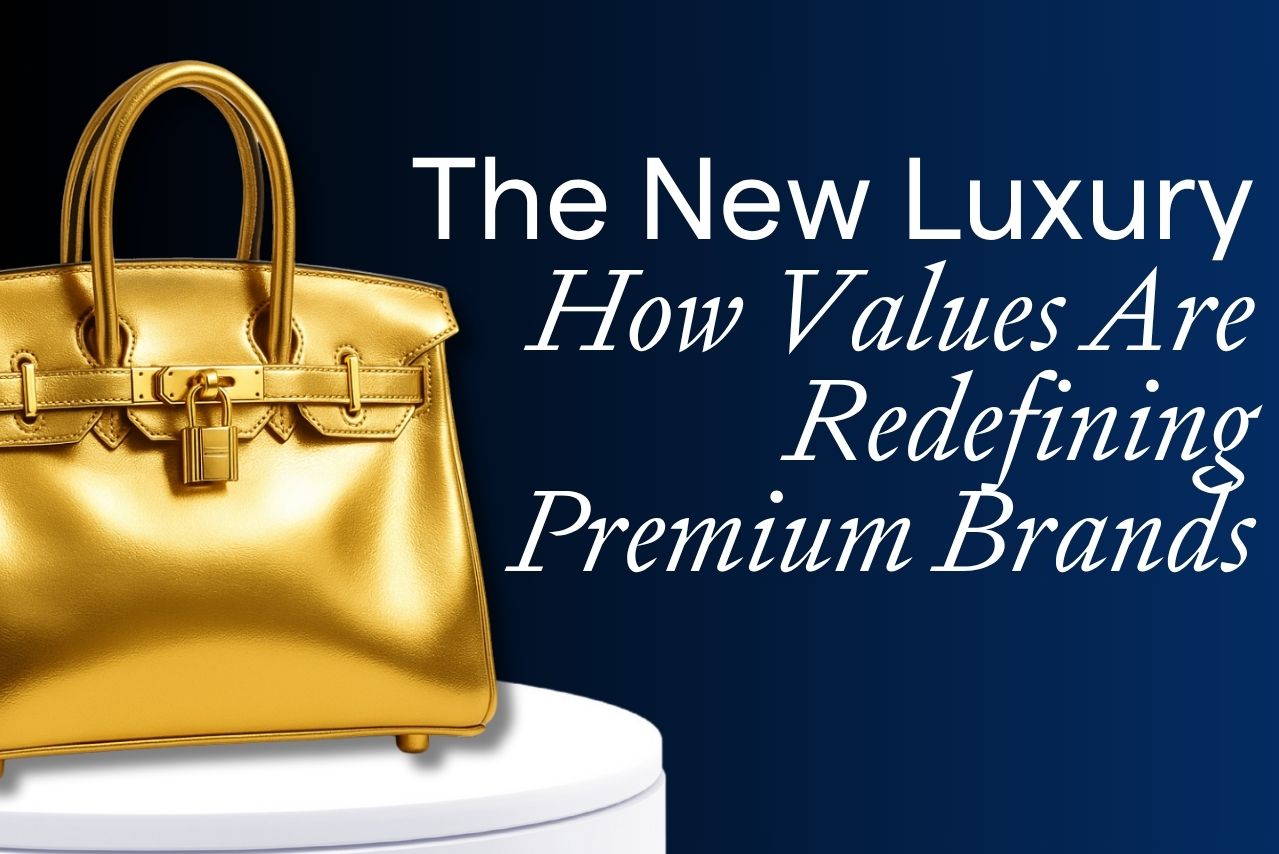
The New Luxury: How Values Are Redefining Premium Brands

In the not-so-distant past, luxury was defined by price tags, exclusivity, and a sense of unattainability. Brands focused on glossy packaging, elite clientele, and perfectly polished imagery. But today, a new generation of consumers is rewriting the rules of what luxury means. It’s no longer just about looking expensive—it’s about feeling aligned with something deeper. Welcome to the era of value-driven luxury.

Why Values Matter More Than Price

Gen Z and Millennials are driving a shift in purchasing behavior that prioritizes personal values over traditional status symbols. For these consumers, luxury isn’t about what you have—it’s about what a brand stands for. Brands that embody sustainability, inclusivity, and transparency are stealing the spotlight from legacy luxury players.

A study by First Insight and the Baker Retailing Center at the University of Pennsylvania found that 73% of Gen Z consumers are willing to pay more for sustainable products. Luxury, in this sense, is becoming less about materialism and more about meaning.

Brands Doing It Right

Brands like Patagonia have long embodied responsible consumption, proving that sustainability and success can coexist. Aesop has built a cult following with its minimalist design, quality ingredients, and commitment to ethical sourcing. Even traditional luxury houses like Gucci are adapting, using recycled materials and supporting social causes.

These brands have discovered the secret: values build loyalty. Consumers don’t just buy their products—they buy into their philosophies.

The Role of Storytelling

At W.Bradford, we believe storytelling is the key to transforming values into visceral brand experiences. A logo can be copied. A product can be mimicked. But a well-crafted brand narrative that reflects real values? That’s irreplicable.

We help brands articulate their purpose and embed it across every touchpoint—from visual identity to content strategy. Because today’s luxury is human, honest, and emotionally intelligent.

The Takeaway

If you want to stay relevant in this new age of luxury, it’s time to rethink your brand’s foundation. What do you stand for? How are you proving it? And is your brand expression truly aligned with your values?

Luxury isn’t dying. It’s just evolving. And we’re here to help you evolve with it.

Let’s explore how W.Bradford can elevate your brand
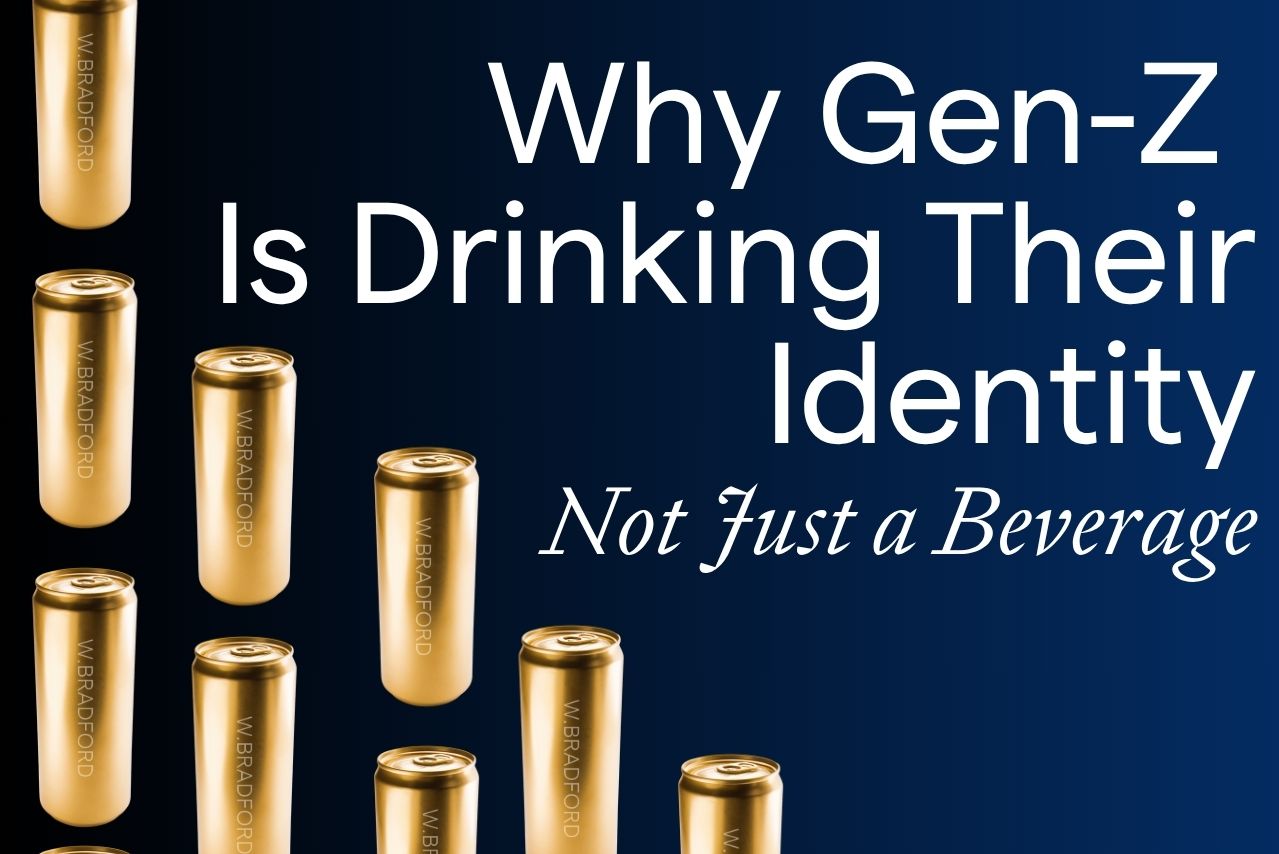
Why Gen Z Is Drinking Their Identity—Not Just a Beverage

In 2025, Gen Z isn’t just choosing what to drink—they’re choosing who to be. The surge in popularity of prebiotic sodas like Olipop and Poppi isn’t just about fizz or fiber. It’s about identity. It’s about belonging. It’s about choosing a product that says, “I care about my body, the planet, and how I show up in the world.” At W.Bradford, we don’t see these as soda trends—we see them as signals. Because when brands become personal, emotional, and lifestyle-driven, the marketing game shifts from awareness to alignment. And Gen Z is setting the tone.

The Sober Curious Shift: A New Kind of Social Status

Gen Z is leading the “sober curious” movement, favoring mindful consumption over escapism. According to a 2024 NCSolutions study, 61% of Gen Z plan to reduce their alcohol intake—a 53% jump from the previous year (source).

Prebiotic sodas have emerged as a way to opt into wellness without sacrificing social cues. They’re functional, fun, and most importantly, they mean something.

These cultural cues are what we decode and design around. Our brand strategy work helps clients find their place in the conversation—and in the lifestyle choices of their audience.

Branding That Speaks Gen Z

Olipop’s nostalgic flavors and Poppi’s bold influencer campaigns aren’t just smart marketing—they’re emotional architecture. They’ve turned soda into a status symbol, rooted in health-conscious habits and a curated aesthetic.

  • Olipop leans into storytelling: flavors that call back to childhood, visual cues that suggest simplicity and science (NoGood breakdown).
  • Poppi taps social clout: TikTok virality, UGC, and hyper-targeted FOMO moments (Adweek analysis).

Branding is no longer about product-first messaging. It’s about experience-first ecosystems. We help brands build intentional identities that live where their audience lives—from fridge doors to For You Pages.

What Brands Can Learn

Prebiotic sodas offer a case study in modern brand building: blending emotion, aspiration, and authenticity.

If you’re trying to connect with Gen Z (or any culturally attuned consumer), the takeaway is clear:

  1. Sell values, not features.
  2. Design for emotional utility, not just function.
  3. Create experiences that feel like inside jokes, not broad broadcasts.

We call this emotional design. And it’s how we help our clients shift from selling products to building presence.

Your Brand. Their Lifestyle.

At W.Bradford, we help brands figure out what they mean—and how that meaning shows up in a rapidly evolving world.

Whether you’re launching a new product or refreshing your brand for a Gen Z audience, we help you design for relevance, resonance, and ROI. Because in today’s market, alignment is influence.

Let’s make your brand something people feel good about reaching for.

When to Rebrand: A Practical Checklist for Founders and CMOs

How to know it’s time to evolve your identity—before the market decides for you. Let’s be honest: no one wakes up and wants to rebrand. It’s not a quick logo swap. It’s a deep dive. A gut check. A sometimes messy middle that requires clarity, conviction, and collaboration. But sometimes, the decision to rebrand isn’t a dramatic overhaul—it’s a practical necessity. One rooted in growth, evolution, or a new direction. So, how do you know if it’s time? Whether you’re a founder with a gut feeling or a CMO facing quarterly pivots, here’s a strategic checklist to help you assess whether your brand identity is still doing the job it was designed to do—or if it’s time for something new.

1. You’ve Outgrown Your Origin Story

You launched with a scrappy mission, a strong logo, and a website built in a weekend. But now, you’re scaling. Your team has changed. Your product suite is smarter. Your audience has grown up—and so have you.

Ask yourself:

  • Does our current identity reflect who we are today?
  • Are we still telling the same story we were when we started?
  • Are customers getting the wrong idea about our size, category, or offering?

If the answer is yes, your brand might be holding you back instead of helping you grow.

Explore how we help brands evolve their story.

2. Your Brand Doesn’t Feel Differentiated Anymore

You might’ve been first in your category—or at least loud enough to stand out. But competitors have caught up and copied your playbook, and now everyone looks… the same.

Signs to look for:

  • Prospects confuse you with a competitor.
  • Your visual identity doesn’t stand out in the scroll.
  • Your tone, messaging, or mission could belong to any brand in your space.

Brand differentiation is about owning a lane—and if you’ve lost your edge, it’s time to sharpen the tools.

See how we craft bold, unmistakable identities.

3. Your Audience Has Shifted

Maybe you started DTC and are now selling wholesale. Maybe you’re moving upstream from small business to enterprise. Maybe Gen Z is finally engaging with your brand, and you’re still speaking in Millennial.

Audience misalignment sounds like:

  • “We’re getting leads, but not the right ones.”
  • “Our customers don’t understand our full offering.”
  • “We’re attracting the wrong people to our content.”

Rebranding helps you reposition for the audience you want—not just the one you already have.

Let’s align your brand with your future audience.

4. Internal Teams Are Creating Workarounds

One of the clearest signals it’s time to rebrand? Your own team is bending the brand to make it work.

Red flags include:

  • Sales decks all look different
  • Designers and marketers are constantly “tweaking” brand elements
  • New hires are confused about what your brand stands for

Your brand should be a toolkit that enables growth—not a set of outdated constraints people try to work around.

Read our approach to building usable brand systems.

5. There’s a New Vision, Offering, or Strategy

You’re entering new markets. You’ve launched a new product. You’ve pivoted to a new value prop. The bones of your business have changed—and your brand hasn’t caught up.

Rebranding at this stage can:

  • Set the tone for a new chapter
  • Build internal alignment and excitement
  • Signal evolution to your audience

Think of your brand like a lighthouse—it should always shine light on where you’re headed next.

Here’s how we help brands signal what’s next.

6. You’re Embarrassed to Send People to Your Website

We’ve all been there. You meet someone at a conference, have a great chat, and then… you hope they don’t look up your site.

If your brand no longer reflects your quality, creativity, or maturity, then that’s the loudest sign of all.

Let us help you build a site you’re proud to share.

So, Is It Time?

Rebranding isn’t about changing who you are. It’s about getting back to the core of your identity—and then amplifying it with precision, intention, and clarity.

At W.Bradford, we work with brands that are ready for that next chapter. Whether it’s a full identity transformation or a thoughtful refresh, we build from strategy, not trend. Because the best brands aren’t just beautiful. They’re built to last.

Schedule a brand consult with our team.

Why Strategic Substance Matters More Than Aesthetic in 2025

Let’s get one thing straight: having a vibe is not the same thing as having a brand. And yet, in 2025, far too many companies are confusing the two—prioritizing aesthetics over strategy, trendiness over truth, and “look” over lasting value. You’ve seen it. The soft color palettes, recycled taglines, and Gen-Z-filtered social feeds that look good in a pitch deck—but collapse under the weight of real market pressure.

At W.Bradford, we believe bold brands aren’t built on vibes alone. They’re built on clarity. On knowing what you stand for, who you’re for, and why you’re worth paying attention to. That kind of foundation can’t be mood-boarded—it has to be unearthed through smart, strategic work.

Aesthetic is important. We love good design as much as the next agency (probably more). But design without direction is decoration. What separates a flash-in-the-pan “cool brand” from a magnetic, revenue-driving brand is its core positioning—and how consistently it shows up across every touchpoint. Think of brands like Liquid Death, Glossier, or Athletic Brewing Co.. They didn’t just ride trends—they built tribes. They knew their story, lived their values, and let strategy fuel their creative.

We see a growing wave of brands launching with aesthetic-first identities and no idea what their voice sounds like, what their customer needs, or how their product is actually different. And in a world where 81% of consumers say they need to trust a brand to buy from it, that’s a risky game.

Strategic clarity isn’t a luxury—it’s a growth engine. It informs how you show up in the market, how you talk about what you offer, how you engage your audience, and how you evolve. It’s what helps you avoid having to “rebrand” every time the algorithm changes or your sales dip. And if you do evolve? Strategy is what gives you the through-line—so your audience comes with you.

At W.Bradford, we specialize in helping brands find their voice, sharpen their value, and build identities that earn attention—not just likes. Whether you’re scaling a startup, refreshing a legacy brand, or launching something new, we lead with insight, not assumption. With intention, not imitation. Our work bridges the strategic with the visual, ensuring the creative is never disconnected from the brand’s core.

If your brand’s biggest strength is its aesthetic, it’s time to ask: what happens when the vibe fades?

Ready to build a brand that lasts longer than the latest trend cycle?

Let’s talk strategy. Let’s build bold. → Contact W.Bradford

The Lost Art of B2B Marketing Planning: Why Strategy Still Reigns Supreme

In the dynamic realm of B2B marketing, the foundational practice of meticulous planning often takes a backseat amidst rapid technological advancements and the allure of the latest tools. However, as highlighted by Steven Manifold in his insightful article, “The Forgotten Art of Planning in B2B Marketing,” neglecting robust planning can lead to fragmented strategies and diminished outcomes.

The Current Landscape: Fragmented Tools and Strategies

Many B2B marketers find themselves navigating a maze of disparate tools—ranging from project management platforms to traditional spreadsheets—to document and track their marketing strategies. This fragmentation often results in challenges such as misaligned objectives, inefficient budget tracking, and inconsistent performance monitoring. A survey referenced by Manifold reveals that nearly half of B2B marketers grapple with planning spread across multiple systems, underscoring the pressing need for integrated solutions.

The Promise and Limitations of AI in Planning

Artificial Intelligence (AI) has undeniably revolutionized various facets of marketing, from automating client engagement to uncovering hidden patterns through deep analysis. However, when it comes to the foundational aspect of planning, AI’s role remains limited. While AI can enhance efficiency and provide predictive insights, it cannot replace the strategic foresight and human judgment essential for crafting comprehensive marketing plans. Therefore, integrating AI tools should complement, not replace, the core planning processes.

The Path Forward: Embracing Integrated Planning Solutions

To address these challenges, B2B marketers must prioritize the adoption of integrated planning tools that seamlessly connect various facets of marketing operations. Such platforms should facilitate:

  • Unified Documentation: Centralizing objectives, strategies, and tactics to ensure all team members are aligned and informed.
  • Real-Time Budget Tracking: Providing up-to-date financial insights to enable agile decision-making and resource allocation.
  • Performance Monitoring: Offering dashboards and analytics that reflect real-time results, allowing for timely adjustments and optimizations.

Conclusion: Reinvigorating the Art of Planning

In the pursuit of innovation and efficiency, B2B marketers must not overlook the enduring value of meticulous planning. By embracing integrated solutions and acknowledging the irreplaceable role of strategic foresight, organizations can navigate the complexities of modern marketing with confidence and clarity.

At W.Bradford, we recognize the critical importance of robust planning in driving marketing success. Our commitment lies in blending strategic insight with cutting-edge tools to craft campaigns that not only resonate but also deliver measurable results.

Creative That Converts: The Art and Science of High-Performing Campaigns | W.Bradford Insights

What makes marketing creative truly effective? Is it the visual appeal, the messaging, or the strategy behind it? The answer lies in the intersection of art and science. While compelling visuals and storytelling draw audiences in, data-driven decision-making ensures that creative assets drive measurable results. Let’s explore the key principles of crafting high-performing campaigns that convert.

The Power of Visual Storytelling

Humans process visuals 60,000 times faster than text, making compelling imagery a cornerstone of high-performing campaigns. But not all visuals are created equal. Research shows that campaigns featuring human-centric imagery and authentic brand narratives outperform stock-heavy content. Learn more about visual marketing trends.

Data-Backed Personalization

Consumers expect personalized experiences, and generic creative no longer cuts it. A recent study found that personalized campaigns deliver 5-8x higher ROI than non-personalized efforts. Leveraging AI-driven insights, brands can create adaptive content tailored to audience segments, ensuring relevancy and engagement. Explore the power of AI in marketing.

The Science Behind Color and Design

Color psychology plays a significant role in consumer decision-making. Studies indicate that 90% of snap judgments about a brand are based on color alone. Meanwhile, clean layouts, ample white space, and strategic typography contribute to higher engagement rates. Discover the latest design principles for digital marketing.

Emotion-Driven Messaging That Resonates

Marketing that taps into emotions drives action. Whether it’s nostalgia, excitement, or a sense of urgency, campaigns that evoke feelings tend to perform better. Emotional advertising is proven to increase customer loyalty and conversion rates, with 70% of consumers making purchases based on emotional connection. Read more about the psychology of persuasive marketing.

Testing and Optimization for Maximum Impact

Even the most creative campaigns require continuous testing to maximize performance. A/B testing different headlines, visuals, and CTAs can improve conversion rates by up to 300%. Real-time analytics help marketers refine their creative approach, ensuring that each asset contributes to overall campaign success. Get insights on A/B testing best practices.

Ready to Elevate Your Creative Strategy?

At W.Bradford, we bridge the gap between creativity and data to craft high-performing marketing campaigns that captivate and convert. Whether you need visually stunning content, AI-driven personalization, or strategic A/B testing, our team is here to elevate your brand’s creative impact.

Let’s create campaigns that don’t just look great—but drive real results. Contact W.Bradford today to start building your next high-performing campaign.

SPARK. SHAPE. SCALE
Let's Go

Let’s Get Started

Ready for an all-in partner with the talent, skills, and guts to take you to the next level? Share information below, and we’ll be in touch soon.